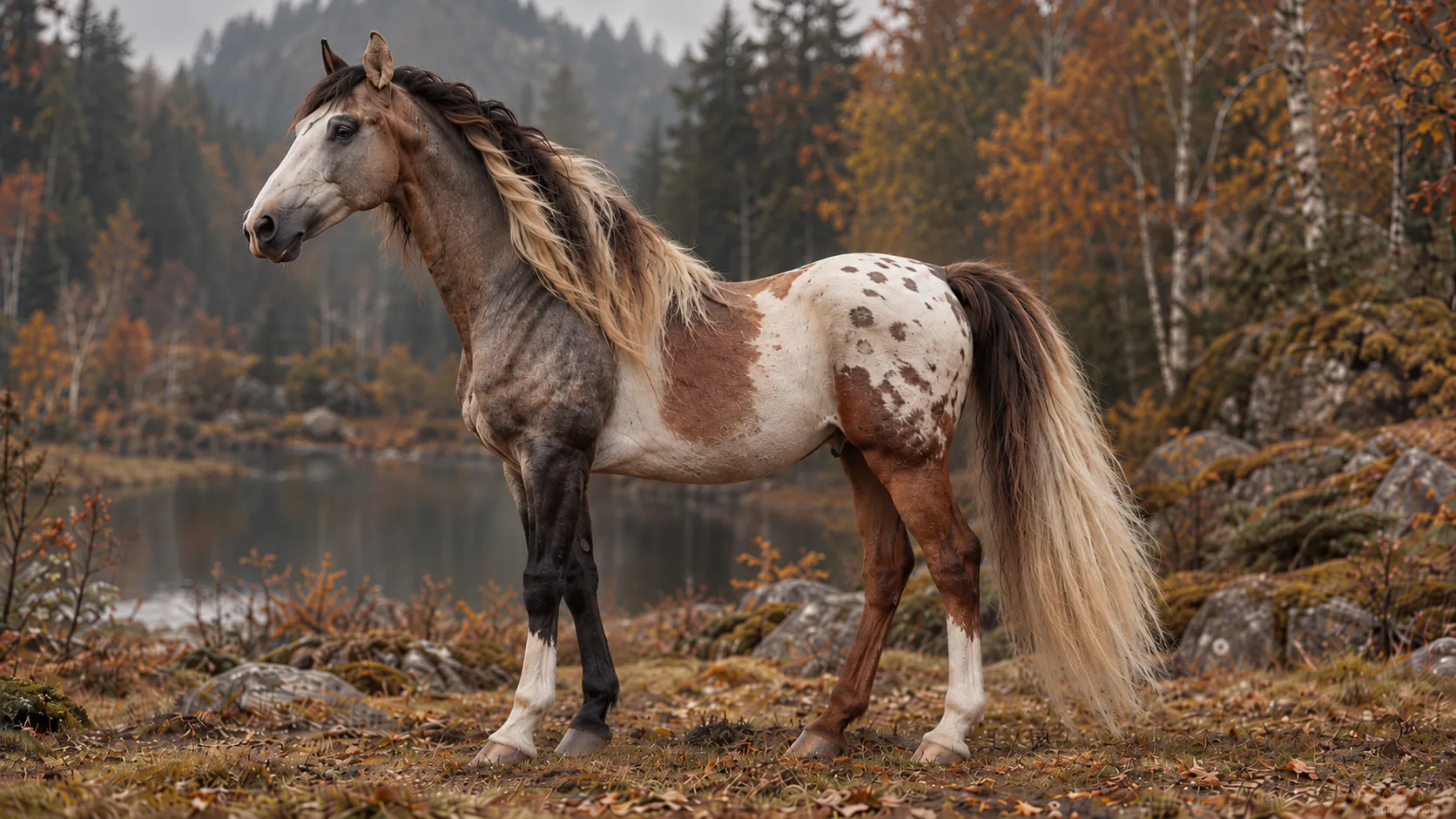
Lately, I keep seeing photographers proudly adding #NoAI to their work. I understand where the reaction comes from. Generative AI has entered photography with extraordinary speed, bringing legitimate questions about authorship, copyright, authenticity, and what it even means to create an image. But the more often I see that hashtag used as a declaration of artistic purity, the more uncomfortable I become with the simplicity of the message.
Because what exactly do we mean by no AI? If you use Lightroom to automatically select a subject, sky, background, person, hair, skin, or clothing, you're already using tools Adobe explicitly describes as AI-powered. Photoshop can identify subjects and objects, while its generative tools can remove, replace, extend, and invent parts of an image. Artificial intelligence is no longer some strange external machine standing outside the photographer's darkroom. It is increasingly built into the darkroom itself.
And yet I've seen a curious contradiction in the photographic world. AI is treated as unacceptable when it carries a certain label, while extensive manipulation performed through familiar tools is accepted almost without question. A photographer may object passionately to generated imagery and then reshape an animal's mane, replace an ear, remove distracting objects, alter the background, combine elements from different frames, or perform enough retouching that the final image describes a scene that never quite existed in front of the camera. Apparently pixels become morally different depending on which button moved them.
I'm not arguing that selecting a subject with AI is equivalent to generating an entire photograph from a prompt. It clearly isn't. There is a meaningful difference between using machine learning to create a mask around something you actually photographed and asking a generative model to invent the subject, light, background, and composition from nothing. Authorship matters. Intent matters. The amount of human input matters. Pretending that every use of AI belongs in the same category only makes the discussion less useful.
What bothers me is not that photographers draw boundaries. We need boundaries, especially now. What bothers me is pretending those boundaries are obvious, universal, and conveniently located exactly behind whatever tools we personally happen to use. If removing a branch manually is acceptable, does Content-Aware Fill change the nature of the photograph? What about an AI removal tool? What about replacing an ear? Extending a mane? Reconstructing part of a background? At which click does photography suddenly stop being photography?
I don't have a clean answer, and perhaps that's precisely the point. Photography has never been completely innocent. We choose lenses, perspectives, shutter speeds, moments, crops, colors, contrast, and what remains outside the frame. The darkroom manipulated reality long before Photoshop existed, and Photoshop was altering it decades before generative AI became something photographers argued about on social media.
Perhaps instead of #NoAI, what we need is more honesty about how an image was made. There is nothing shameful about using technology as part of a creative process, just as there is nothing wrong with choosing not to use it. But claiming technological purity while quietly relying on algorithms whenever they make the tedious parts easier feels less like an artistic principle and more like a very carefully selected definition of purity.
The interesting question was never whether AI touched an image.
The interesting question is how much of the final image still belongs to the photographer.