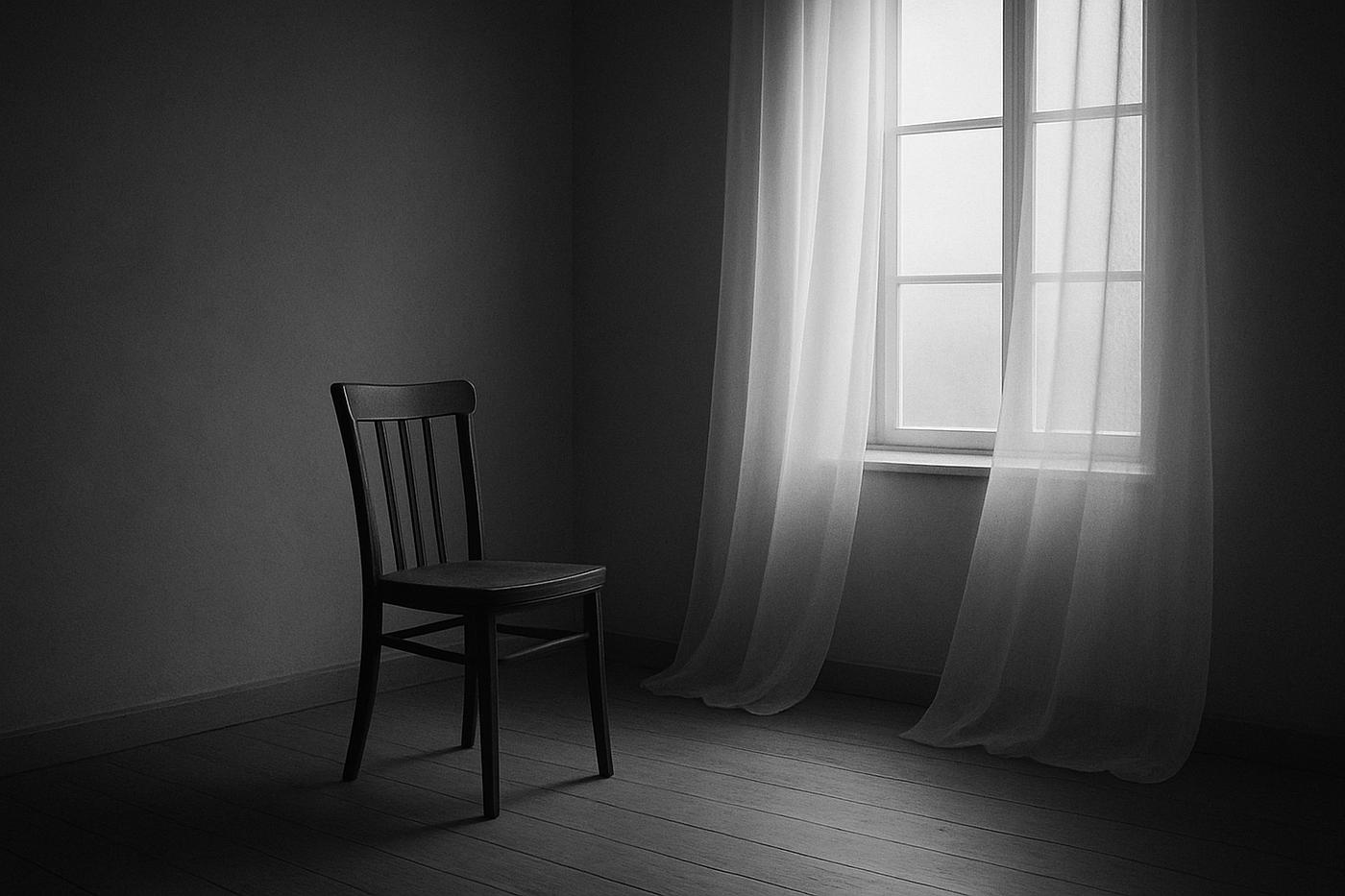
I remember a time when sharing something online felt genuinely exciting. You created something, uploaded it, and waited to see what others thought. Not because you were chasing numbers, building a personal brand, or trying to please an algorithm, but because you wanted to share a small part of your world. There was something simple and honest about that experience. People discovered your work, conversations happened naturally, and sometimes a connection lasted far longer than the photograph or story that started it. Somewhere along the way, however, that feeling began to disappear. I can't point to the exact moment when it happened, but I know that the internet I once enjoyed no longer feels like the same place.
Today, opening social media often feels less like entering a community and more like walking into a crowded room where everyone is shouting for attention. Everything competes to be noticed, everything needs to be immediate, and everything seems designed to keep us scrolling just a little longer. What once felt like a place for inspiration and meaningful conversations has gradually become an endless stream of carefully curated lives, manufactured emotions, advertisements, and content created primarily to satisfy algorithms. Creativity is still there, of course, but increasingly buried beneath the noise. And somewhere in that endless competition for attention, I began to lose the desire to participate.
What frustrates me most, however, is the way the largest social media companies have transformed visibility into something that can be bought. We spend years building an audience, encouraging people to follow our work, creating content, and contributing to the very platforms that profit from our presence. Yet having followers no longer means those people will actually see what we publish. An algorithm decides which posts deserve attention and which quietly disappear. And when the reach becomes disappointing, there is always a convenient solution waiting just a click away: pay to promote your work. Suddenly, the audience you spent years building feels less like a community you can reach and more like a privilege you may have to keep paying for.
I find something deeply cynical about that arrangement. The platforms benefit from the content we create, the time we spend, and the people we attract. Then they offer to sell us additional visibility within the same environment we've helped make valuable. It isn't literally necessary to pay for every post, and some creators still reach enormous audiences organically. But the uncertainty itself becomes part of the problem. If you want predictable visibility, you're encouraged to open your wallet, and once you start paying, the temptation to keep doing so is difficult to escape. It begins to feel like a recurring toll for the privilege of being noticed. Not because your work has suddenly become worse, but because someone else controls the road between you and your audience.
For creative people, this creates an uncomfortable conflict. You spend hours, sometimes days, working on something meaningful, only to discover that its visibility may depend on publishing schedules, engagement patterns, video formats, and advertising budgets. Instead of concentrating on the work itself, you begin wondering how to package it for maximum exposure. Should it be a Reel? Should you follow a trend? Should you post more frequently? Should you pay to reach people who already chose to follow you? Slowly, the creative process becomes entangled with marketing decisions that have very little to do with why you started creating in the first place. At some point, you have to ask yourself whether you're still making things because they matter to you or because you're afraid of becoming invisible.
There is another consequence that troubles me just as much. The constant exposure to other people's achievements creates a distorted sense of reality. Someone is always producing more, traveling further, reaching a larger audience, or appearing to live a more interesting life. Even when you understand that social media presents carefully selected fragments rather than complete lives, it's difficult not to compare them with your own ordinary existence. And when your own work receives little attention, it's easy to interpret silence as failure. We know intellectually that numbers don't determine artistic value, yet emotionally we still allow them to influence how we see ourselves. The platforms have become remarkably effective at turning our need for recognition into something measurable, and then making us feel that the measurement is never quite enough.
Perhaps that's why I've gradually started avoiding social media. Not because I believe I'm above it, or because I think everyone who participates is wasting their time. I still appreciate the people I've met, the artists I've discovered, and the opportunities these platforms can provide. But I no longer feel comfortable with the expectation that I must constantly remain visible, available, productive, and interesting. I don't want every photograph to become content, every experience to become a story, or every creative idea to be evaluated through its potential reach. Sometimes I want to make something simply because I feel the need to make it, without immediately wondering whether it will attract enough attention to justify the effort.
Stepping away isn't entirely comfortable either. There is always that quiet fear that people will forget you, that your work will disappear into obscurity, or that you're somehow falling behind while everyone else continues moving forward. Perhaps that's the most remarkable achievement of modern social media: convincing us that being absent is almost the same as not existing. But I increasingly wonder what we're sacrificing to remain visible. Time, attention, peace of mind, and sometimes the simple pleasure of creating something without expecting anything in return. I don't want to spend my life feeding a system that makes me feel inadequate for not feeding it often enough.
I don't know whether I'll ever feel completely at home on social media again. Perhaps the platforms have changed too much, or perhaps I've simply changed with time. What I do know is that I miss the feeling of sharing something because it mattered to me, without calculating its potential reach or wondering whether I should pay to make sure someone actually sees it. Maybe this blog is my quiet attempt to recover a little of that freedom. A place where thoughts can exist without competing for attention, where photographs don't have to perform, and where being understood by a few people means more than being briefly noticed by thousands. I would rather build something small that genuinely belongs to me than spend another decade renting visibility from someone else's algorithm.
Further Reading
- Socialinsider — Social Media Reach Statistics — Research and statistics on organic reach on Instagram and Facebook.
- Meta — Instagram Feed Ranking System — Meta's explanation of how Instagram ranks Feed posts and determines which posts users are likely to see.
- Business Insider — The Balance of Power in Influencer Marketing Is Shifting — Analysis of the growing role of platforms and paid promotion in creator marketing.